
If you have been dealing with chronic bloating, you have probably tried a probiotic at some point. Maybe you tried several. Maybe you have an entire shelf of them.
And if you noticed that some of them made you feel worse — more bloated, more gassy, or suddenly dealing with reflux you did not have before — you were not imagining it. That is a real and well-documented phenomenon (1). And it is one of the most important things to understand if you are trying to heal your gut.
Here is the truth that most influencers will never tell you: probiotics are not always the fix, and depending on what is going on in your gut, they can actually make things worse.
What Is SIBO and Why Does It Matter?
SIBO stands for Small Intestinal Bacterial Overgrowth. It is exactly what it sounds like — an overgrowth of bacteria in the small intestine where bacteria do not belong in large numbers.
Your small intestine is supposed to be a relatively low-bacteria environment. When bacteria from the large intestine migrate upward and take up residence there, they begin fermenting the food you eat before it can be properly digested. The result is intense bloating, gas, distension, and a gut that seems to react to almost everything you eat — regardless of how clean your diet is.
SIBO is far more common than most people realize, and it is one of the most frequently missed drivers of chronic digestive symptoms.
Why Standard Probiotics Can Make SIBO Worse
Here is where most well-intentioned gut health advice goes sideways.
When you are bloated and uncomfortable, the instinct is to reach for a probiotic. More good bacteria must mean a healthier gut, right?
Not necessarily — and especially not if SIBO is present.
Standard over-the-counter probiotics contain high doses of live bacterial strains (1). If you already have an overgrowth of bacteria in your small intestine, adding more live bacteria into that environment can pour fuel directly onto the fire (1). The bacteria in the probiotic can feed the existing overgrowth, intensify fermentation, and make your bloating and gas significantly worse (1).
This is why so many people notice they feel more bloated or develop reflux after starting a probiotic — their body is telling them something important (3).
Taking a probiotic without knowing whether SIBO is present is a bit like trying to plant a garden without first clearing the weeds. The conditions are not right yet, and you may end up making the problem worse instead of better.
So Are Probiotics Ever Helpful for SIBO?
Yes — but the research is nuanced, and the approach matters enormously.
There is ongoing debate in the functional medicine world about whether probiotics should be used during an active SIBO protocol at all. What the research does support is that specific probiotic strains, used in the right sequence, can be part of an effective SIBO treatment plan (3).
The key word there is sequence.
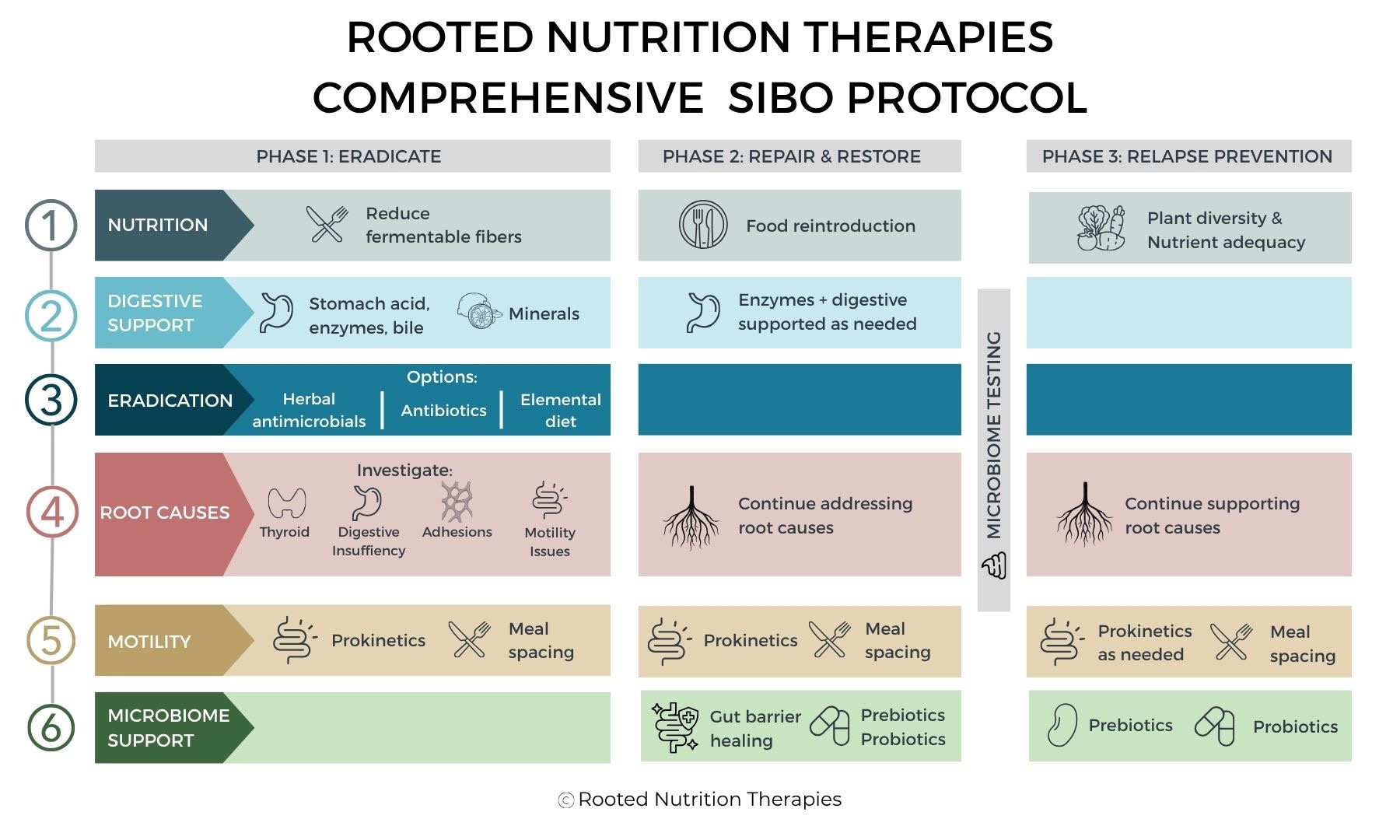
Addressing SIBO is not a one-step process. It involves multiple phases — from eradicating the overgrowth and supporting your digestive function, to repairing the gut lining and deliberately rebuilding a healthy, resilient microbiome. Probiotics have a role in that process, but it is not the role most people assume, and the timing matters more than most people realize (4).
Jumping straight to a probiotic before the overgrowth has been addressed skips the most critical steps. And rebuilding your microbiome with the wrong tool at the wrong time can set you back significantly.
If you are dealing with chronic bloating and you have already tried probiotics without relief — or they made things worse — that is important clinical information. It is worth finding out whether SIBO or another form of bacterial imbalance is driving your symptoms..
A data-driven, root-cause approach covered by insurance can give you real answers instead of more guessing.
Why Spore-Based Probiotics Are Different
When I do use probiotics as part of a SIBO protocol, I use spore-based probiotics exclusively — and there are very specific reasons for that.
The first is survivability. Standard live-strain probiotics face a significant obstacle before they even reach your intestines: your stomach acid. Many live strains are destroyed in transit, which means a large portion of what you swallow never actually makes it to where it needs to go.
Spore-based probiotics are encased in a natural protective shell that allows them to survive stomach acid completely intact and arrive where they are actually needed- past the small intestine and in the colon.
The second — and more important — reason is what they do once they get there. Spore-based probiotics do not just add bacteria to your gut. They work by changing the gut ecology itself, creating an environment that supports the growth of critical keystone species that regulate immune function, strengthen the gut lining, and maintain long-term microbial balance. Standard live-strain probiotics do not have this same ecology-shifting effect.
This is why spore-based probiotics are also resilient enough to be used alongside antimicrobial treatment during certain phases of a SIBO protocol — something standard probiotics simply cannot do reliably.
The spore-based probiotic I use and recommend in my practice is Mega Spore Biotic. It is practitioner-grade, does not require refrigeration, and is the one I reach for most consistently with my SIBO clients.
The Bottom Line
If you have been throwing probiotics at your bloating and wondering why nothing is changing, the answer is probably not a better probiotic. It is understanding what is actually going on in your gut so you can address it in the right order.
Generic probiotics are not designed for SIBO (1). A targeted, sequenced protocol is — one that addresses the overgrowth first, supports your digestive function throughout, and then deliberately rebuilds your microbiome with the right tools at the right time (4).
If you are ready to stop guessing and start getting real answers, I am here.